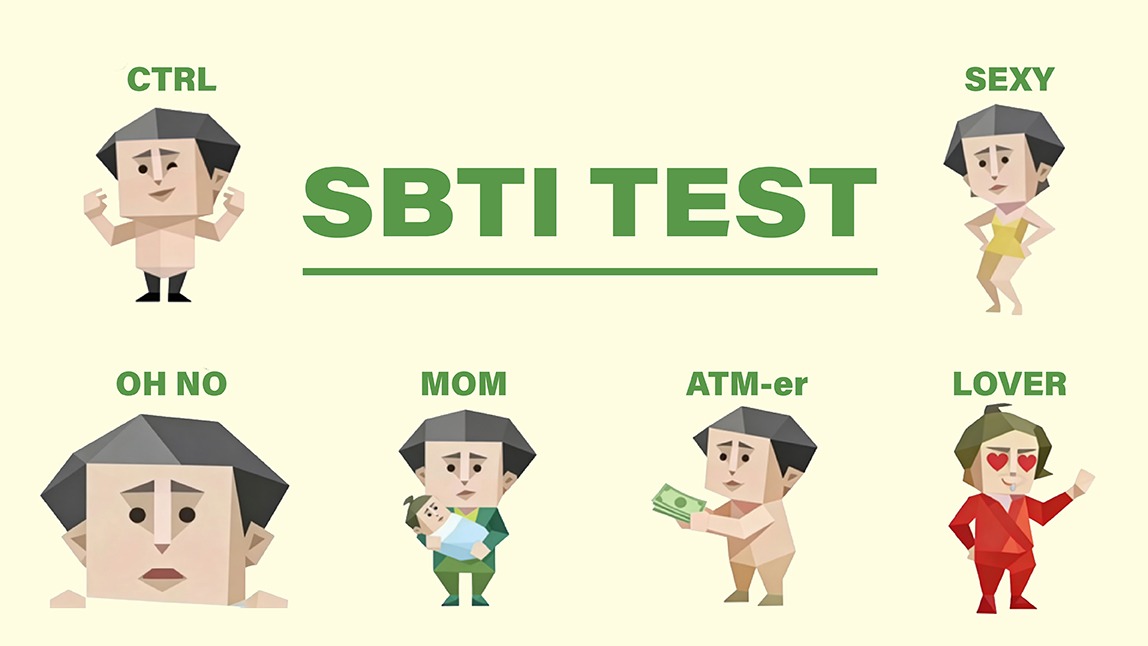
Why Is SBTI Suddenly Everywhere? How Is It Different From MBTI, and Can It Really Explain Love?
What is SBTI, why is it suddenly all over social media, how is it different from MBTI, and is it actually useful for understanding relationships? This guide breaks it all down.
Why Is SBTI Suddenly Everywhere Right Now?
If you have been scrolling social platforms lately, you have probably already seen people posting their SBTI results.
It spread fast for a simple reason: low barrier, strong labels, fast sharing. Compared with traditional personality tests, SBTI feels more like a social catchphrase. You do not need to learn a complicated theory or study cognitive functions first. As soon as you read a few lines, it is easy to think, "Why does this feel exactly like me?"
This kind of test is especially easy to share:
- The result is short, so it is easy to screenshot
- The labels are strong, so they instantly spark discussion
- It has a self-mocking sense of humor, so reposting it feels low-pressure
- Friends can immediately start matching people to types, which naturally creates interaction
So it is not surprising that SBTI blew up so quickly. It did not go viral because a rigorous theory system won attention first. It went viral because it was fun, easy to get, and easy to post.
What Is the Difference Between SBTI and MBTI?
When many people first see SBTI, they assume it is just a newer version of MBTI. But the two are actually built for very different purposes.
MBTI Is More Like a Personality Framework
At its core, MBTI is meant to help you understand how you take in information, make decisions, and relate to the outside world. It leans more toward:
- Thinking style
- Decision-making preferences
- Social and energy patterns
- Long-term personality tendencies
That is why MBTI is better at answering questions like:
- Why do I always need to think things through before I act?
- Why do I rely more on logic than emotion?
- Why can I recharge simply by being alone?
SBTI Is More Like a Social Label Generator
SBTI is not strong because it is serious. Its strength is that it quickly captures a person's outward vibe and social impression. It is closer to:
- Internet-ready labels
- A simplified way to describe emotional energy
- A personality meme that is easy to spread
It can give you a quick conclusion, but that conclusion is usually more like "what kind of impression you give off" than "how you actually function in deep relationships."
Put another way:
- MBTI is more like a deeper personality coordinate system
- SBTI is more like a personality nickname made for social media
One is structural. The other is highly shareable.
Why Do So Many People Feel Like SBTI Is "Scarily Accurate"?
That is because it grabs three things that are especially likely to trigger instant resonance in personality tests.
1. It Describes the Version of You That Other People Notice First
For most people, self-judgment does not come from a complete personality analysis. It comes from how other people tend to describe them. SBTI often hits exactly that zone:
- Do you come across as warm or distant?
- Do you feel like the main character or a supporting one?
- Are you high-energy or low-energy?
- Do people feel drawn toward you, or do they feel like observing you from a distance?
These descriptions are extremely easy to sense in real life, which is why they feel so instantly accurate.
2. It Skips Complex Explanations and Gives You a Label Right Away
Many tests do not go viral not because they are inaccurate, but because they ask too much cognitive effort from users. SBTI spreads so easily because it gives you an immediate answer. It does not hand you a full theory. It hands you an identity label you can post immediately.
3. It Fits the Way People Socialize Today
People take tests now not only to understand themselves, but also to:
- Find people like them
- Create conversation topics
- Explain certain behaviors
- Build a quick impression in flirting, dating, and chatting
From that angle, SBTI becoming a trend fits today's content logic perfectly. It is not the winner as a formal personality system. It is the winner as an internet-native format.
But Is It Actually Useful for Understanding Love?
The answer depends on what you want to use it for.
If You Just Want a Fun Label or a Quick Icebreaker, Yes
For example, maybe you want to know:
- What kind of romantic vibe you give off
- Whether other people read you as hard to approach
- Whether you feel high-presence or low-presence in social settings
For that, SBTI really is useful. It works well as a first-impression tool, and it is great for opening a conversation.
If You Want to Understand How a Relationship Works, It Is Not Enough
Once people actually get into a relationship, the questions they care about are usually not "What type do I seem like?" They are things like:
- Am I the kind of person who pushes the relationship forward, or do I naturally follow my partner's lead?
- Do I need frequent companionship, or do I need more personal space?
- When we fight, do I solve the problem first or deal with the emotions first?
- Do I care more about stability and practicality, or chemistry and emotional intensity?
Those are the questions that shape how intimacy actually works. And that is exactly where SBTI starts to run out of depth.
It can tell you "what impression you give," but it cannot necessarily tell you:
- How you love
- Why you keep getting hurt in the same relationship patterns
- What kind of response you need most from a partner
- Why you and a certain type keep missing each other emotionally

If You Really Want to Understand Love, What Should You Look At Instead?
If your goal is to understand intimate relationships, the focus needs to shift from personality labels to relationship dimensions.
In love, what is usually more useful than a flashy label is a set of concrete questions like these:
1. Who Naturally Leads the Pace of the Relationship?
Some people naturally like planning dates, moving the relationship forward, and making decisions. Others are more comfortable responding, adapting, and following. That directly affects power balance and emotional security in the relationship.
2. Who Needs More Frequent Reassurance?
Some people need regular contact, hugs, and responses to feel secure in love. Others need room to breathe, and too much closeness starts to feel stressful. A lot of couples fight over exactly this difference.
3. Are You More Practical, or More Passion-Driven?
Some people look at long-term plans, real-life conditions, and stability first. Others care more about chemistry, attraction, and emotional intensity. Neither is wrong, but if the difference is not understood, it creates easy misunderstandings.
4. Are You More Open, or More Deeply Attached?
Some people like keeping more options open before defining a relationship. Others move into focused emotional investment as soon as they feel something real. That difference strongly shapes both the talking stage and the relationship itself.
Compared with those dimensions, simply knowing "what kind of type I seem like" can only help so much.
SBTI Is Fun, But It Is Not a Relationship Manual
SBTI became popular because it hits people's fascination with self-labeling in a way that feels light, fast, and instantly relatable.
But love is not a screenshot, and it is not a one-line type description.
The places where people usually get stuck in real relationships tend to look more like this:
- You think you are expressing love, but the other person feels pressured
- You think they do not care enough, when their expression style is just different
- You think you are incompatible, when the real issue is different intimacy needs and communication rhythms
So yes, SBTI is great for opening a conversation about yourself, but it is not a substitute for a more precise framework for understanding relationships.
If you really want to know whether you are more leading or following in love, more clingy or independent, more practical or passion-driven, what you need is not more labels. You need a framework built much closer to how intimate relationships actually work.
👉 Want to know what kind of person you really are in love? Take the Love Type 16 test now and see whether your relationship rhythm, attachment needs, and expression style point to a different kind of romantic pattern.