Cross-Frequency Communication: The Art of L Group (Leader) vs F Group (Follower) in Love
A deep analysis of communication differences between Leader Types and Follower Types in romantic relationships. Learn to bridge personality frequencies and let love resonate together.
"Why won't you talk?" vs "Can you stop pushing me?"
In relationships, we often encounter this scenario:
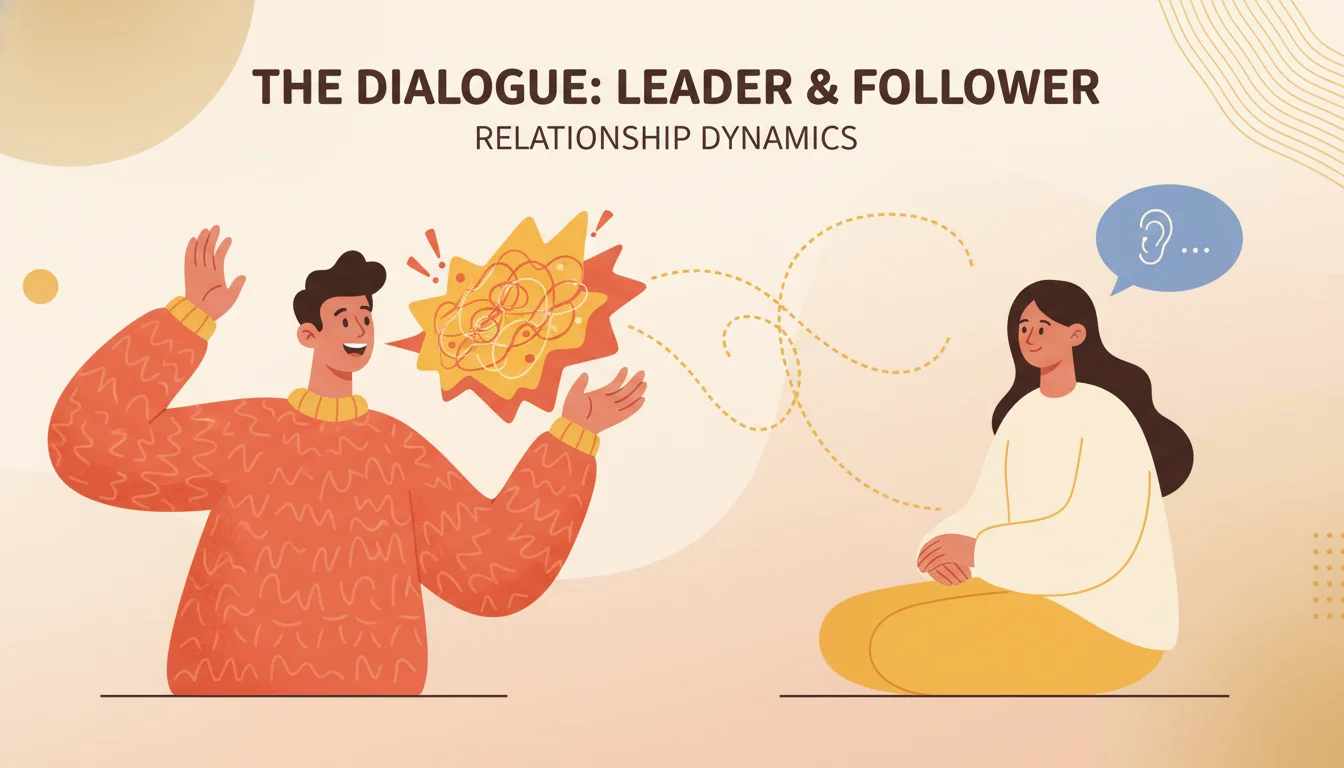
One person rushes to solve the problem, speaks rapidly, even pressing harder: "Say something!" "What exactly are you thinking?" "How can I know if you won't tell me?"
The other stays silent, eyes averted, maybe even retreating to another room to calm down. Thinking: "Can you give me a minute?" "I haven't figured out what to say yet." "The more you push, the less I can speak."
Then conflict escalates. The pursuer thinks "Do they not care anymore?", the withdrawer thinks "Why are they being so aggressive?"
Traditional MBTI attributes this to the difference between E-types (Extroverts) and I-types (Introverts). But in Love Type 16, this conflict stems more from L Group (Leader/Leaders) and F Group (Follower/Followers) having fundamentally different ways of processing information and outputting energy.
Understanding this difference is the first step to bridging the communication gap.
⚡️ L Group (Leaders): "What I feel now, I need to say now"
Typical Representatives: LC Group (Commanding Sweetheart), LA Group (Reliable Guardian)
L Group is accustomed to releasing energy outward. They organize their thoughts by talking and process emotions through expression. For them, silence isn't golden—silence is torture.
L Group Communication Traits
- Think while talking: Language is their tool for organizing thoughts—things become clearer as they speak
- Hot-process conflict: When problems arise, they want to solve them immediately; waiting only increases anxiety
- Need instant feedback: After saying something, they expect an immediate response
- Interpret silence as rejection: "They're not saying anything—do they not want to deal with me anymore?"
L Group's Inner Monologue During Fights
"I'm not trying to pressure you. I just want to make sure we're on the same page. Your silence makes me panic—I don't know what you're thinking, and I feel locked out. The more you stay silent, the more I want to ask. I know this might annoy you more, but I can't help it."
L Group Landmines:
- Left on read ("You saw it—why won't you respond?")
- Silence is golden ("I don't want to talk" = "You don't matter")
- Silent treatment (even three minutes of cold shoulder makes them restless)
Real Example: Jake (LC Group) had a fight with his girlfriend. She said "I need to calm down" and went to her room. Jake waited five minutes, then started anxiously texting: "Have you figured it out yet?" "Can we talk?" "You're not thinking of breaking up, are you?" His girlfriend got more annoyed, and they had an even bigger fight.

🍃 F Group (Followers): "Let me think... but I haven't figured it out yet"
Typical Representatives: FC Group (Sweet Dependent), FA Group (Gentle Giver)
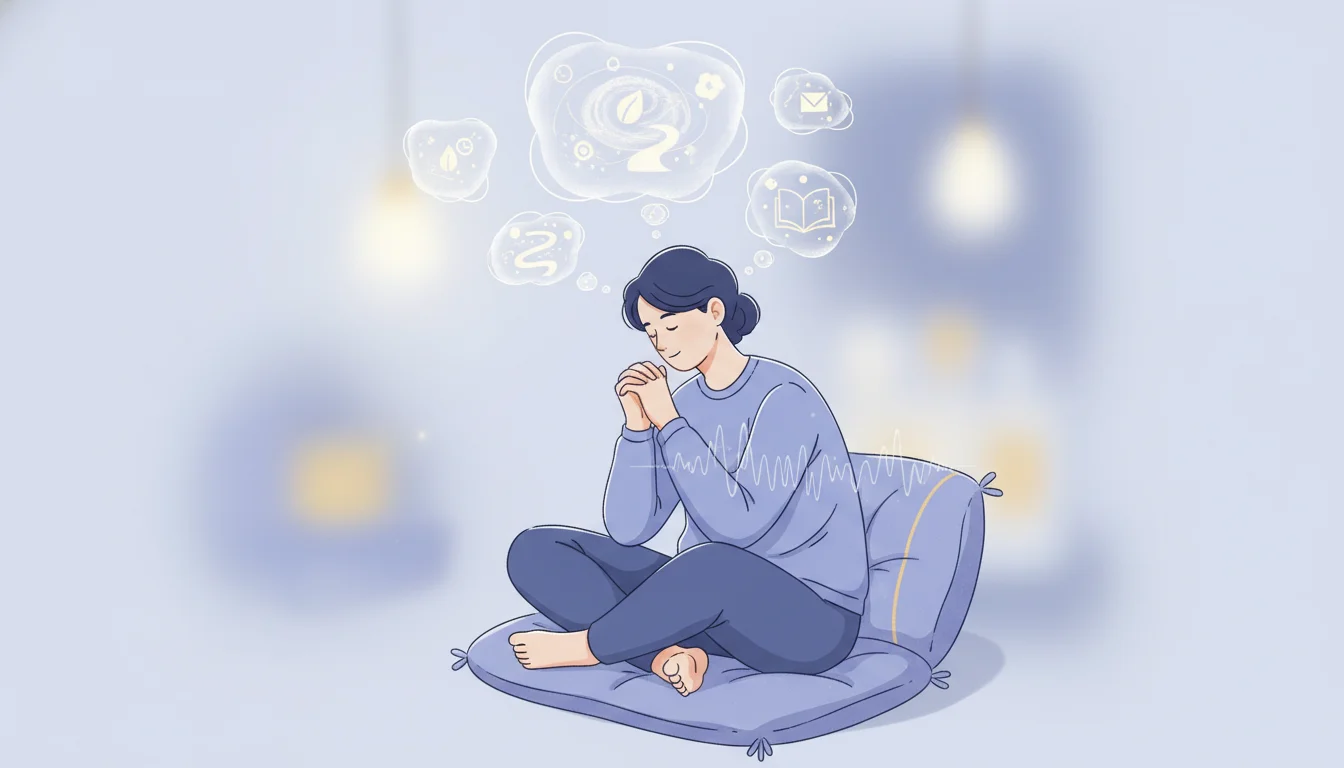
F Group is accustomed to processing energy internally. They need time to handle information and emotions, and won't speak until they've thought things through, because they're afraid of saying something they'll regret.
F Group Communication Traits
- Think before speaking: Language is the product of settled thinking—better not to speak if you haven't thought it through
- Cold-process conflict: Need buffer time to reduce emotional overload—this isn't avoidance
- Need space to organize: When pushed for answers, their mind goes blank
- Interpret pushing as attack: "Why do they keep pressing me? Are they blaming me?"
F Group's Inner Monologue During Fights
"It's not that I don't want to engage with you. My mind is just a mess. You're saying so much that I can't keep up processing it. I need time to think about what you mean and how I should respond. If I speak now, I might say something hurtful, so I choose to stay quiet first. This isn't the silent treatment—it's self-protection, and it's protecting you too. Give me some space. I'll come back."
F Group Landmines:
- Aggressive pushing ("You must give me an answer right now!")
- Being asked to take a position during emotional intensity (brain will crash)
- Not being allowed alone time ("What are you hiding for!")
Real Example: Sophie (FA Group) had a fight with her boyfriend. She said "I need to think" and was about to go to her room. Her boyfriend grabbed her arm: "What's there to think about? Just tell me—do you love me or not?!" Sophie felt cornered, unable to say anything, and could only cry. Her boyfriend got even more frustrated: "Why are you crying? Just say something!"
💥 Classic Conflict Scenarios Analyzed
Scenario 1: The "How was your day?" After Work
L Group: Comes home and talks non-stop about what happened today, expecting their partner to share equally. F Group: Needs to decompress alone first, might just want some quiet time.
Conflict Point: L Group feels F Group "doesn't care about me"; F Group feels L Group is "so noisy, I need to catch my breath."
Solution: Agree on "recharge time"—F Group gets 30 minutes alone after coming home, then chat together.
Scenario 2: The Cooling-Off Period After a Fight
L Group: Wants to resolve it immediately, even if it means talking until midnight. F Group: Needs to calm down first, wants to discuss it tomorrow.
Conflict Point: L Group feels "not solving this means you don't care"; F Group feels "not giving me space means you don't respect me."
Solution: F Group gives a specific time commitment: "I need two hours to cool down. We'll talk in two hours." L Group gets the guarantee of "I'll come back," and anxiety decreases significantly.
Scenario 3: Discussing Big Decisions
L Group: Wants to discuss immediately, thinking while talking, getting clearer as they speak. F Group: Wants to research alone first, then discuss after reaching conclusions.
Conflict Point: L Group feels "why won't you participate in the discussion"; F Group feels "you're forcing me to speak before I'm ready."
Solution: Give advance notice of the topic, giving F Group prep time. For example: "This weekend, let's discuss buying a house? Think about it first."
🧩 How to Resonate Across Frequencies? 5 Practical Tips
1. Establish a "Pause Mechanism"
When L Group feels F Group is about to "escape," or F Group feels L Group is "attacking":
- Agree on a code phrase: Something like "This is a yellow light" or "I need to press pause"
- L Group commits to: Stop pursuing, give the agreed time (like 30 minutes)
- F Group commits to: Promise to return. "I need 20 minutes to calm down. I'll definitely come find you in 20 minutes."
Key: F Group's "promise to return" is L Group's lifesaver. Knowing they'll come back reduces L Group's anxiety by 80%.
2. Distinguish "Venting" from "Seeking Solutions"
L Group often uses "venting" as communication—they talk non-stop just to decompress through speaking, not actually seeking solutions.
- F Group, note: When L Group is rambling on, you don't need to give advice. Just nod and say "What a hassle, honey. That sounds tough."
- L Group, note: If you want F Group to give advice, say so explicitly: "I'd like to hear your thoughts." Otherwise, they'll assume you're just venting.
3. Text as a Buffer
For F Group, text is safer than speaking—they have time to organize their words without being interrupted.
- Try: If they can't say it face-to-face, allow F Group to express deeper thoughts via text or letter
- L Group: After receiving a long message, please read it carefully. Don't immediately call back to argue. Give the words time to settle.
4. "Emotional Temperature" Check-Ins
Before emotions escalate, proactively report your state:
- L Group: "I'm feeling a bit anxious right now. I need you to respond to me."
- F Group: "My mind is a bit cluttered right now. I need five minutes to organize."
Saying it beforehand is a million times better than explaining afterward.
5. Build a "Translation System"
Learn to translate your partner's behavior:
| L Group Behavior | F Group, Please Translate As |
|---|---|
| Keeps asking questions | "I care a lot. I'm afraid of losing you" |
| Rushing to resolve | "I don't want the problem hanging" |
| Getting emotional | "I take this very seriously" |
| F Group Behavior | L Group, Please Translate As |
|---|---|
| Silent | "I'm working hard to process the information" |
| Wanting alone time | "I need to recharge, not escape" |
| Slow to respond | "I'm seriously thinking about how to say this" |
📝 Conclusion
L Group provides the relationship's momentum—pushing problems to be solved, pushing feelings to move forward. F Group provides the relationship's cushion—buffering the damage from conflict, buffering impulsive decisions.
The best communication isn't about making the other person become like you—it's about L Group learning to wait, and F Group learning to speak up.
When L Group says "I'll wait for you," F Group feels respected. When F Group says "I'm back," L Group feels cared for.
This is the love of cross-frequency resonance.
👉 Want to know who's L and who's F between you and your partner? Take the Love Type 16 test now and find your exclusive communication frequency.